Biomechanical Intelligence
Intelligence In Every Step.
GAITRA transforms human motion into measurable biomechanical precision using embedded AI — turning every stride into structured, actionable data.
About
Understanding Gaitra
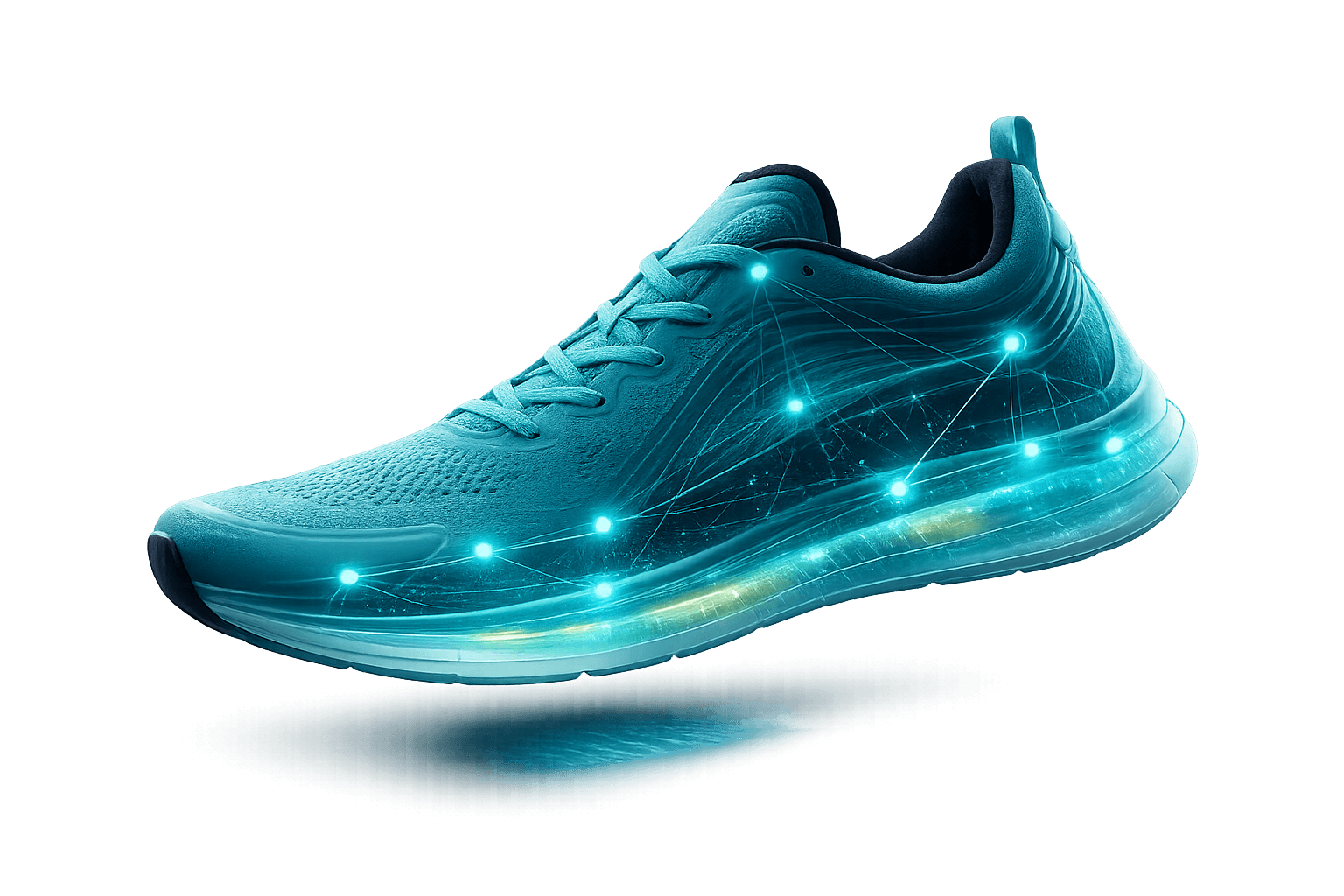
GAITRA is an embedded sensor system worn at the points where movement is generated and absorbed — the foot, the ankle, the limb. A dense array of inertial and pressure sensors reads acceleration, rotation and load continuously, without cameras, markers, or a laboratory environment.
Those raw signals are interpreted on the device itself. Rather than exporting an unreadable stream of numbers, GAITRA resolves motion into the vocabulary clinicians and coaches already use: joint angles, stride symmetry, contact time, loading rate. Every stride becomes a structured record instead of an impression.
Structured gait data matters because movement is one of the earliest and most honest indicators of physical state. It reveals recovery, fatigue, compensation and risk — often before a person can articulate that anything has changed. Making that signal measurable is what turns walking into information.
240+
Data Points Per Stride
Each stride is decomposed into hundreds of discrete measurements — joint angles at the hip, knee and ankle; ground reaction force through the full contact phase; stride symmetry between left and right; cadence; and stance and swing phase timing. Together they describe not just how far someone moved, but exactly how their body did it.
How It Works
Sensors capture multi-axis motion data across the body
Distributed inertial and pressure sensors sample movement hundreds of times per second, from foot strike to hip rotation.
On-device AI processes force, angle, and symmetry in real time
Computation happens at the edge, so raw signals never need to leave the wearer to become meaningful measurements.
Raw movement is structured into a full biomechanical profile
Signals are resolved into named, comparable metrics — a consistent record of how a body actually moves over time.
Insights are delivered instantly to clinicians, coaches, or safety teams
The profile surfaces as live readouts and longitudinal trends, readable in seconds rather than analysed in a lab.
Engine
Embedded Biomechanics Engine
Motion Tracking
Multi-axis angular modeling across every major joint, capturing rotational and directional movement with sub-degree precision. Each joint is tracked independently and then reconciled into a single kinematic chain.
Force Mapping
Real-time pressure analytics from ground contact through push-off, mapped across the full foot. Load distribution is resolved zone by zone so heel strike, midstance and toe-off can be read separately.
Symmetry Detection
Instantly identifies left-right imbalances that can indicate compensation patterns or injury risk. Deviations are measured against the wearer's own baseline rather than a generic population average.
Predictive AI
Uses historical and real-time movement data to forecast injury risk before symptoms appear. Small, gradual drifts in mechanics are flagged while they are still correctable.
Real-Time Gait Analytics
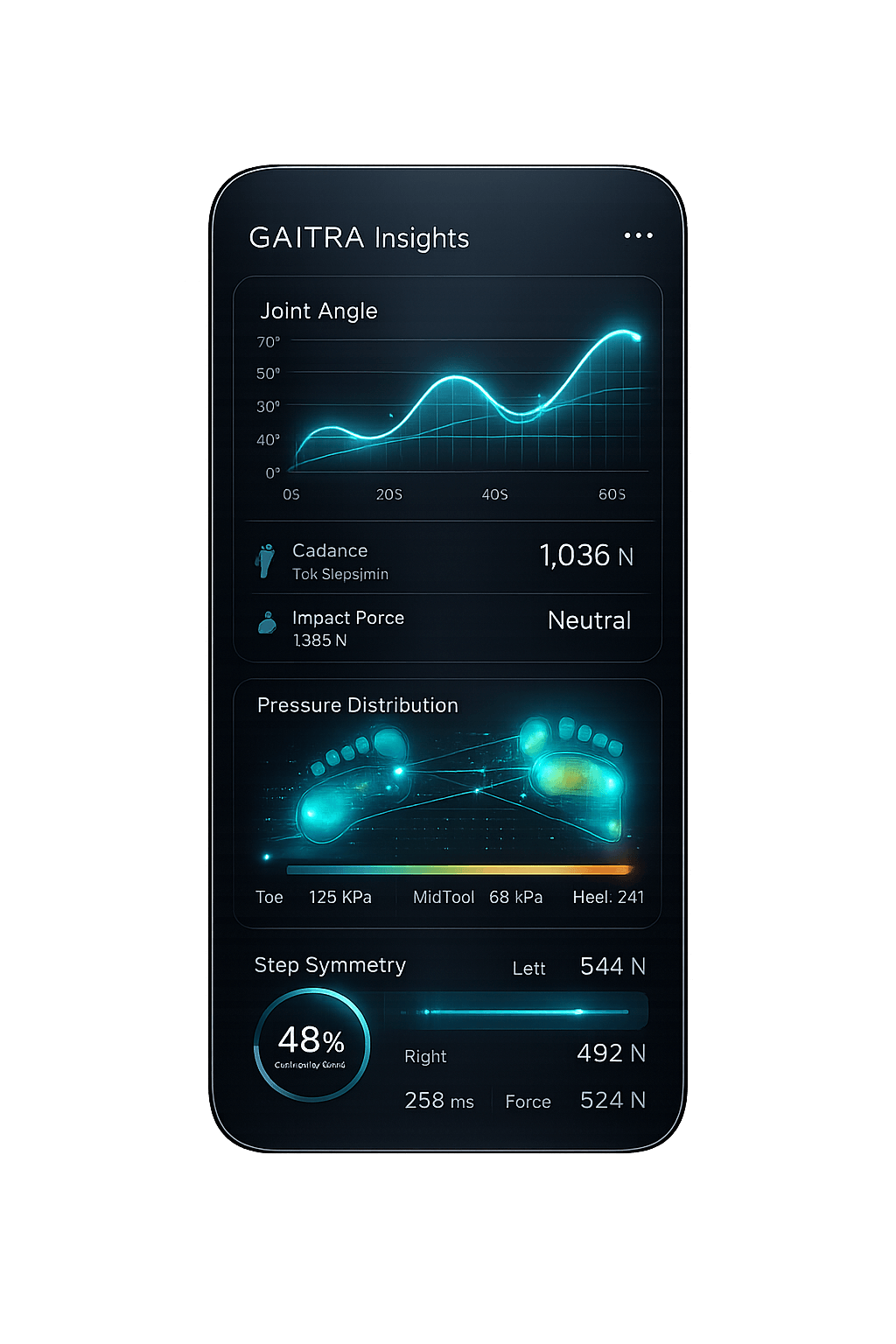
The interface presents live metrics as they are captured — cadence, walking speed, step length and load symmetry updating stride by stride. Historical trend tracking places each session against previous ones, so gradual change is visible rather than inferred. Alert thresholds can be set per individual, flagging deviations from a personal baseline instead of a generic norm, and every view can be exported as a structured report for clinical records or team review.
Designed In Motion
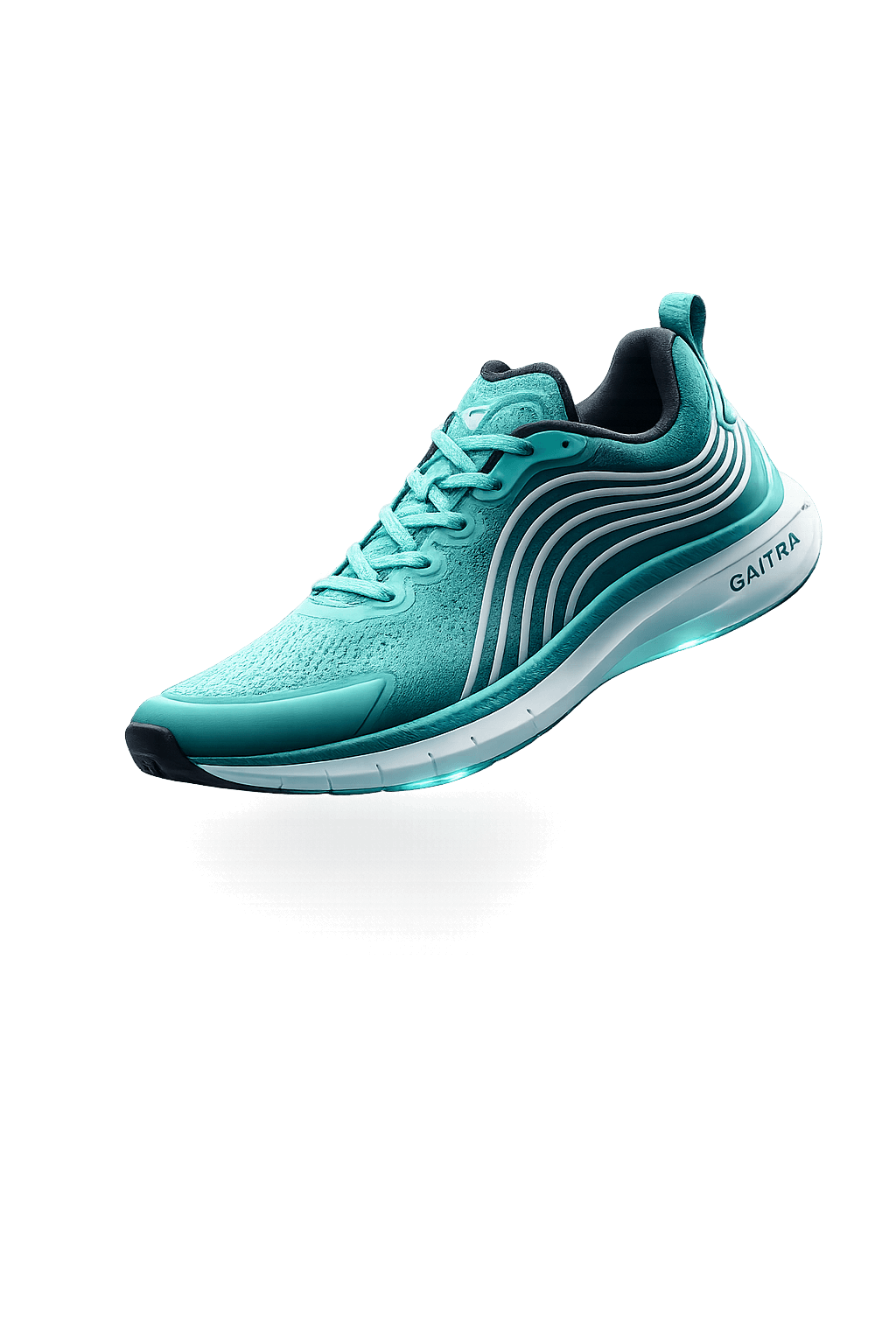
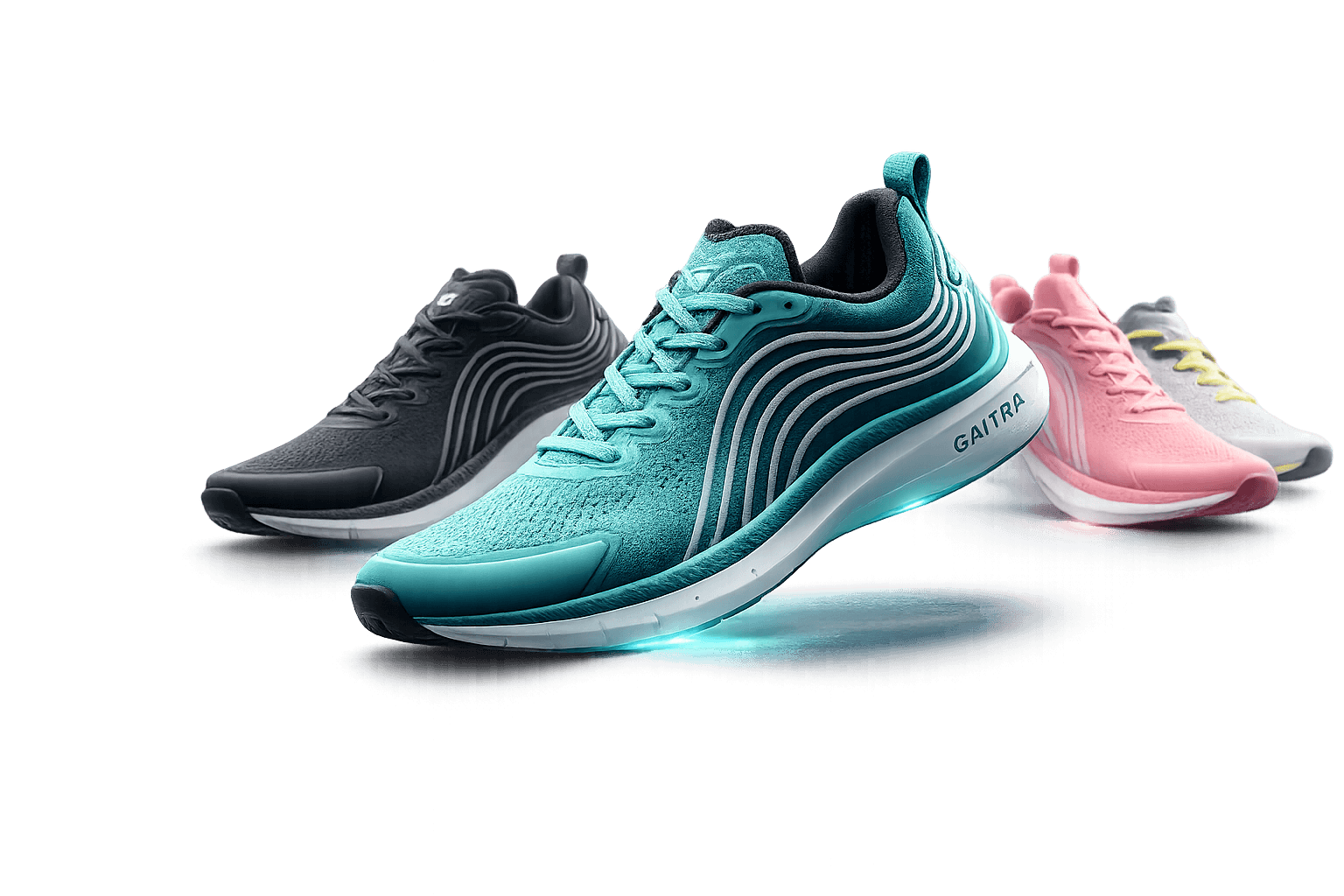
Design 1 — Aqua colourway with layered midsole channels.
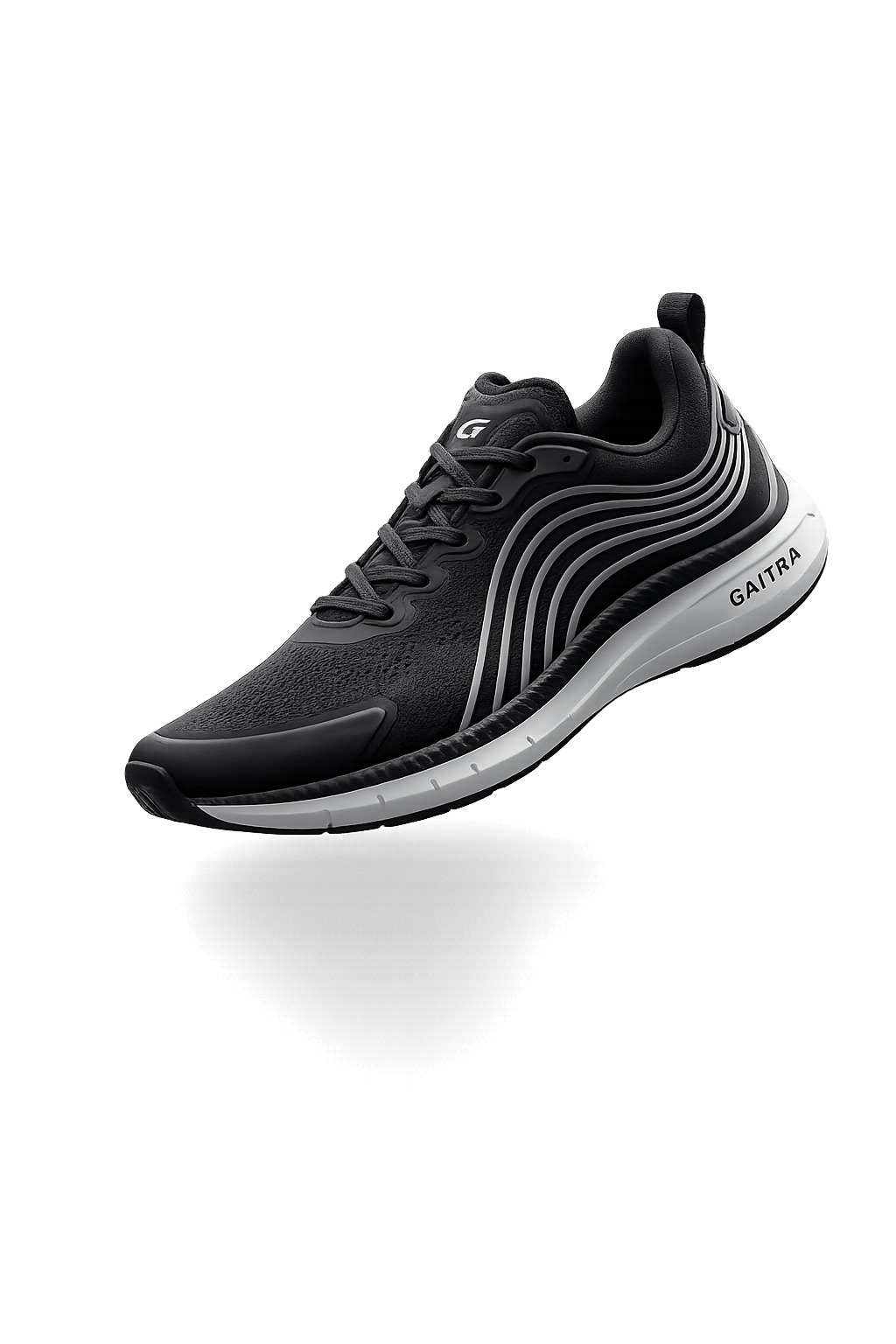
Design 2 — Monochrome black with silver contour lines.
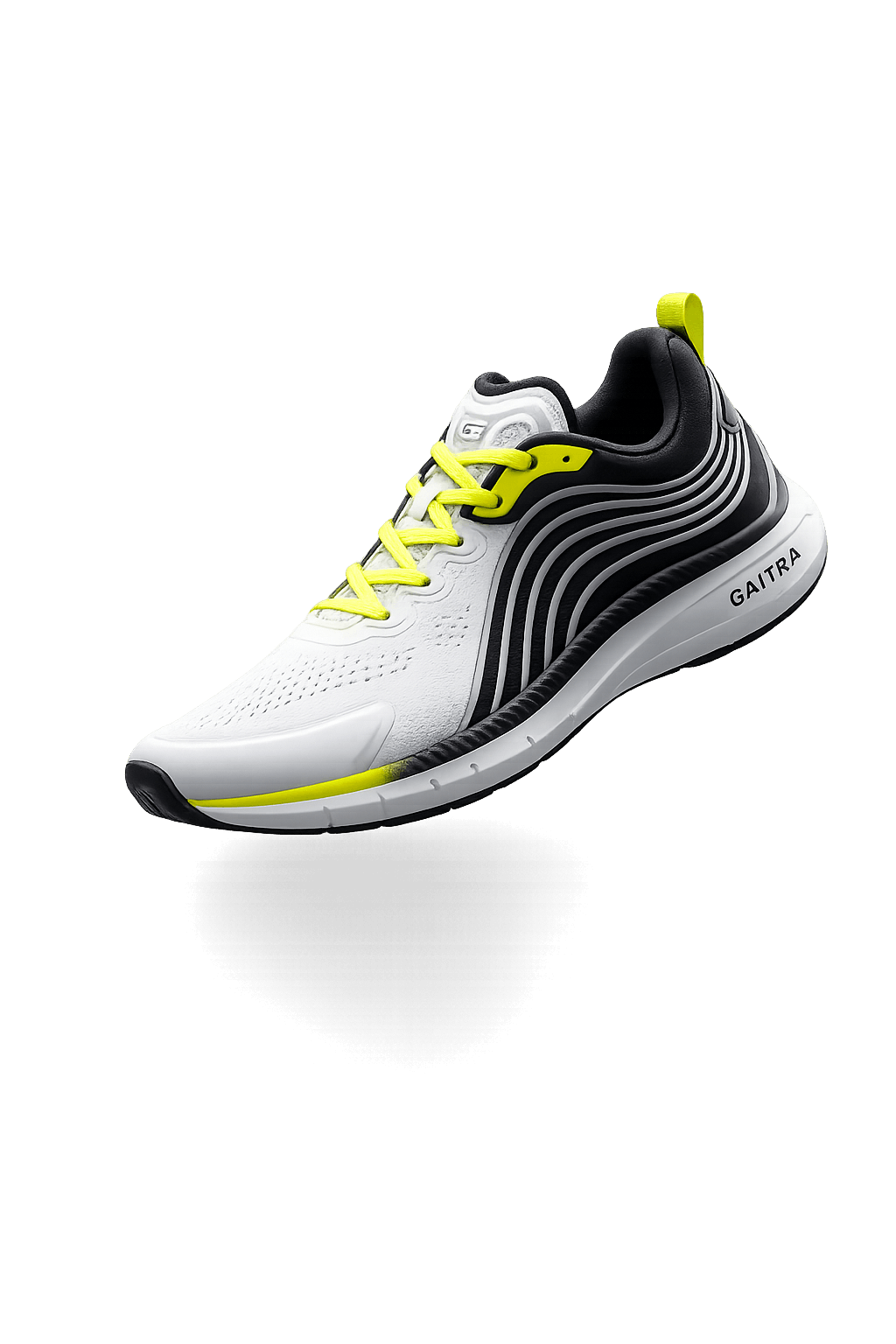
Design 3 — White and volt high-visibility build.
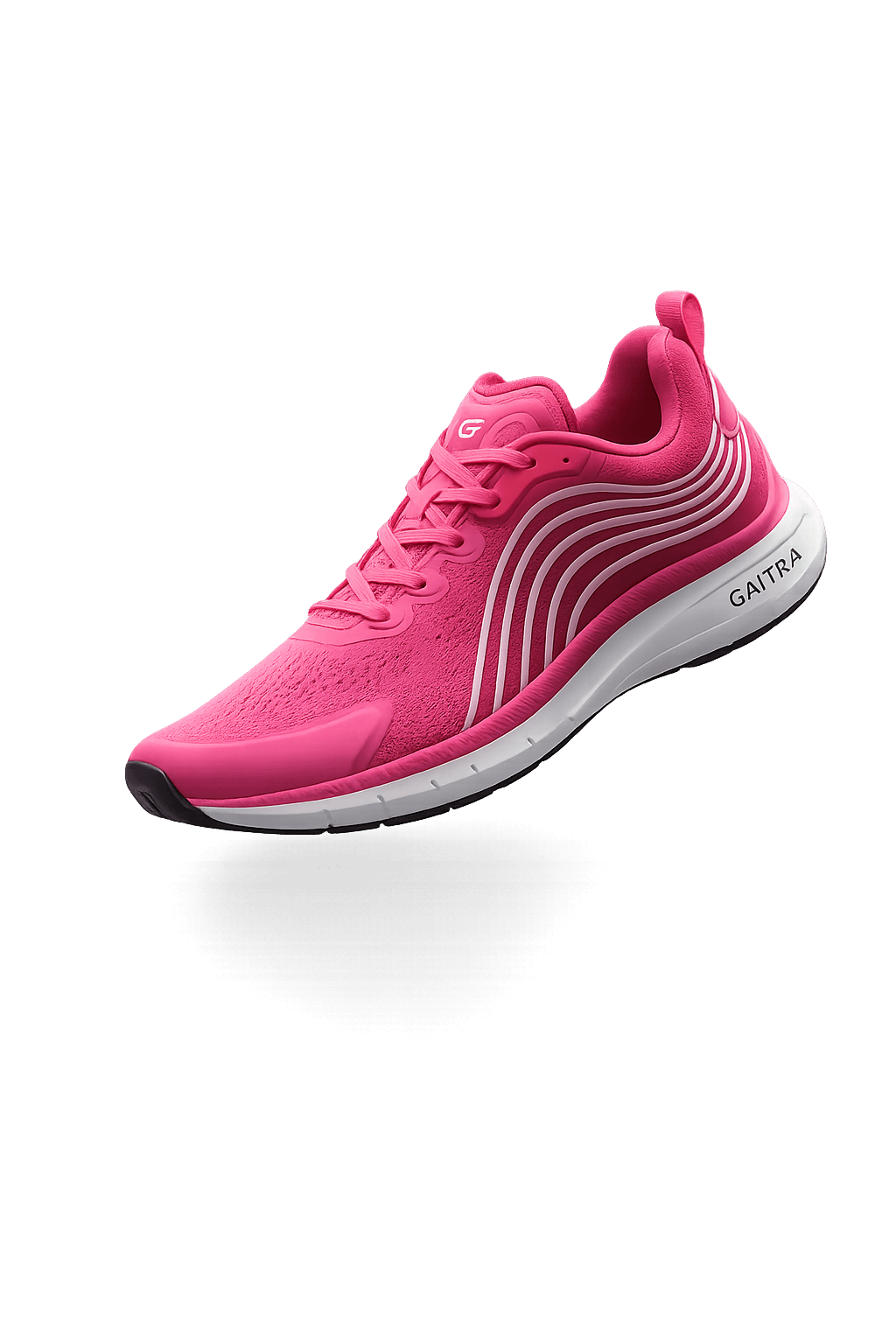
Design 4 — Magenta colourway with white contour lines.
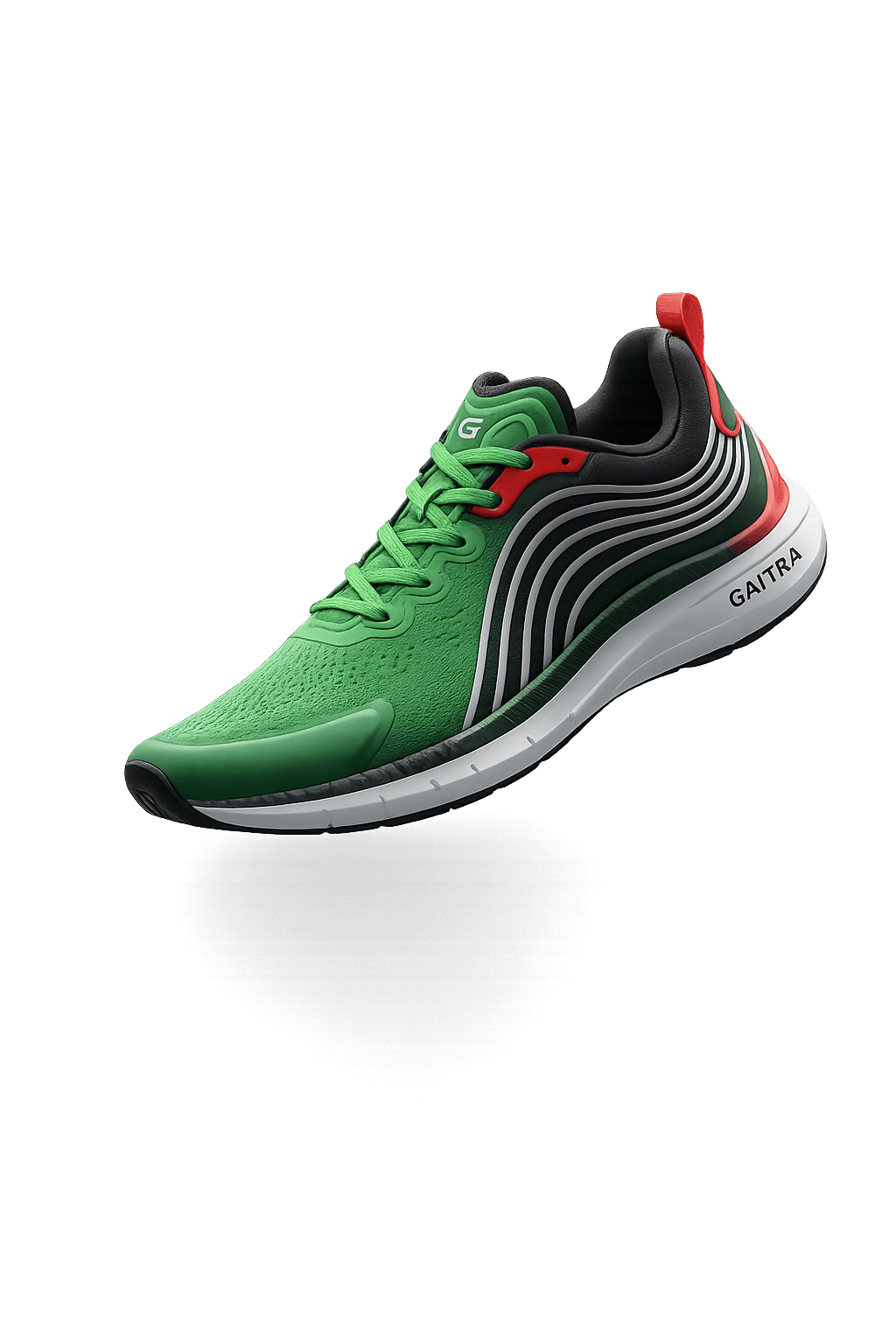
Design 5 — Green and red contrast build.
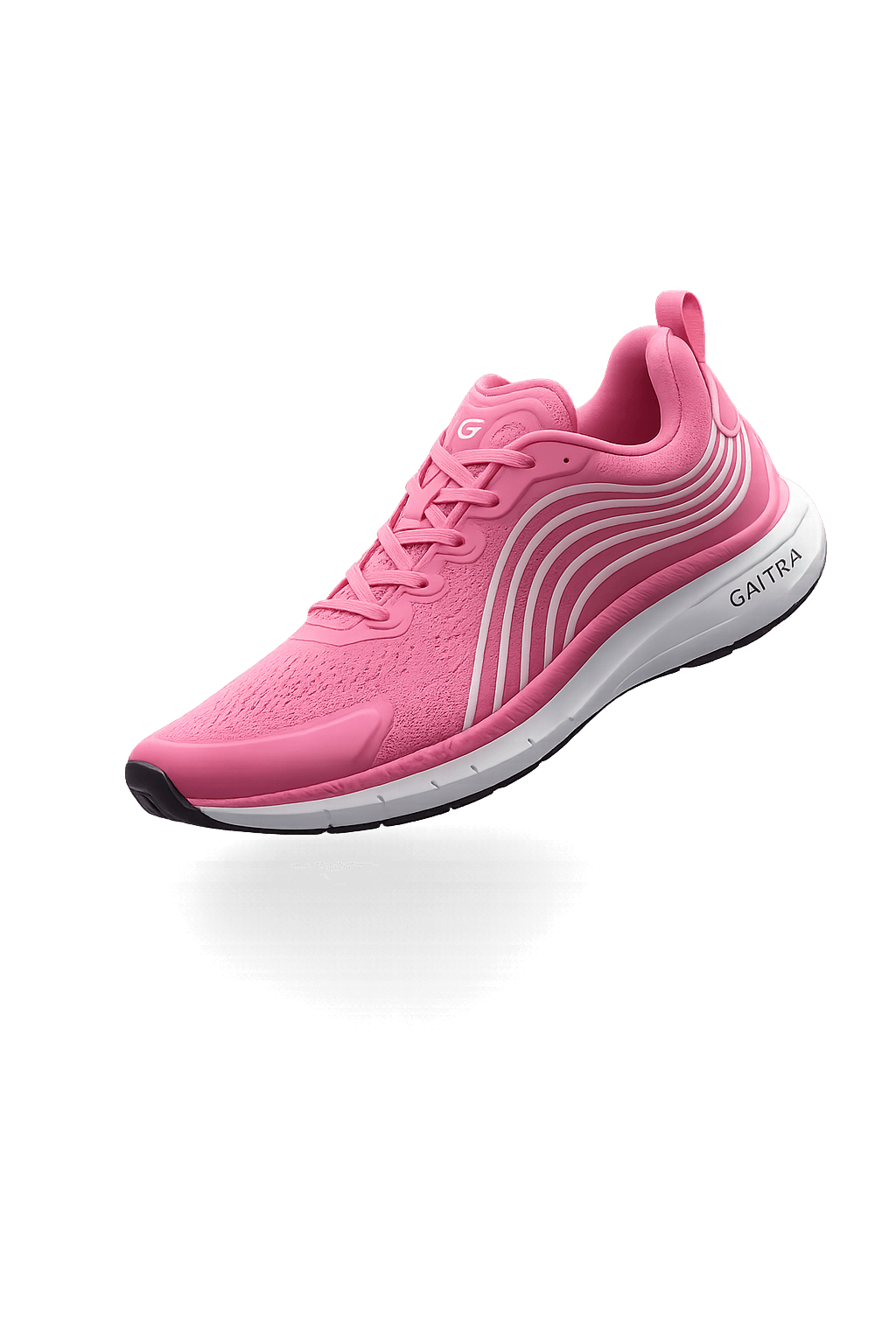
Design 6 — Soft pink colourway with tonal detailing.
Built For Performance
Performance optimization
Elite Sport
Helping athletes and coaches identify micro-inefficiencies in stride mechanics to improve speed and reduce overuse injuries. Session-by-session comparisons show whether a technical change actually held under fatigue.
Clinical gait tracking
Rehabilitation
Giving physical therapists objective, quantifiable data to track recovery progress after injury or surgery. Progress is documented in measurements rather than impressions, across the full course of care.
Fall-risk analytics
Aging Mobility
Detecting early changes in gait pattern that correlate with increased fall risk in older adults. Subtle shifts in cadence and stability appear in the data long before they are visible to an observer.
Workforce injury reduction
Industrial Safety
Monitoring movement patterns in physically demanding jobs to flag fatigue and unsafe biomechanics before injury occurs. Teams can see when load and repetition are quietly changing how people move.
The Future of Motion Is Intelligent.
For most of human history, movement has been assessed by eye. A clinician watched a patient cross a room; a coach watched an athlete round a bend. Judgement was skilled, but it was qualitative, and it could only capture the moments someone happened to be watching.
Measuring motion continuously changes what is knowable. Patterns that unfold over weeks — a slight asymmetry after surgery, a shortening stride in later life, a fatigue signature that appears in the last hour of a shift — become visible while they are still small. The value is not in any single stride, but in the accumulation of them.
Making biomechanical data accessible outside of specialist laboratories means this understanding no longer belongs only to elite institutions. When the way a body moves can be recorded as clearly as heart rate or temperature, movement becomes part of the ordinary language of health, performance and safety.